How to reduce the cost of building a house
Building a private house is the dream of many families, and it is entirely achievable if every step of the process is carefully planned and the available finances are realistically assessed. At the initial stage, advice from specialists can be extremely valuable, and neither time nor resources should be spared in obtaining it. For example, the expertise of an engineering consultant is indispensable for identifying all cost components and providing professional guidance for organizing the construction process, as well as highlighting potential risks. Architect Anna Vasiļjeva, Ainārs Leitēns, head of Nord X, and Jānis Zolbergs, board member of Forma 2, share their recommendations.
In this article, we outline several aspects worth considering in order to optimize the cost of building a house without compromising the desired quality or comfort. Architect Anna Vasiļjeva advises that before making any decision during the construction process, it is important to thoroughly research the market. If this proves difficult, consulting specialists is recommended, as the market contains many suppliers who may suggest the most expensive options to inexperienced clients.
The main factors influencing the cost of building a house include the price of the land plot, the choice of foundations, the type of building structure, roof construction and roofing materials, engineering systems, and exterior and interior finishing solutions.
Choosing a Land Plot
A cheaper plot of land does not necessarily mean lower overall construction costs. The geological composition of the soil determines the type of foundation required. In swampy areas, where land plots are often cheaper, foundation construction can become a very expensive part of the project.
Infrastructure available to the plot is also a significant cost factor. If connection to municipal water supply and sewage networks is not possible, these systems must be installed independently. It is also important to check whether electricity is already available on the plot. It is not enough to know that electricity is nearby; the technical requirements issued by the electricity distribution operator may require upgrades to the nearest transformer station, which can be costly, explains Jānis Zolbergs.
It is also important to examine the local municipality’s development plan. For example, there may be plans to build an industrial area nearby, which could create noise. A highway or a large residential complex could also be planned close to the plot, affecting the peaceful living environment you envisioned.
Special attention should be paid to areas near water bodies. If the municipality’s territorial plan marks the area as potentially flood-prone, even if it has not flooded in the last 50 years, insurance companies may refuse to insure the building.
House Foundations
Foundation construction in poor geological conditions can account for up to 20% of the total project cost. The type of foundation and its cost largely depend on the characteristics of the land plot. Therefore, soil investigation should be carried out before designing the house, as insufficient soil bearing capacity can significantly increase foundation costs.
Knowing the soil composition and groundwater level in advance makes it possible to choose the most suitable foundation type and compare contractor offers to find the most cost-effective solution.
The outdated belief that house foundations must “settle” for a full winter should not be followed. This applied to old technologies such as strip foundations built from fieldstones with gravel or sand fill, which are rarely used today. Incorrect winter protection of modern foundations can even damage them, notes Ainārs Leitēns.
Choosing the cheapest foundation offer without consulting a structural engineer or engineering consultant is not advisable. Soil conditions can vary greatly even between neighboring plots, meaning the appropriate foundation type may differ.
The simplest, most economical, and fastest solution in good soil conditions is a cast reinforced concrete slab foundation built according to the house plan. This solution works well in both good and moderately poor soil conditions, although the slab thickness and reinforcement may need to be increased.
Such foundations are ideal for lightweight single-storey houses, particularly timber-frame buildings. In these cases, the slab also serves as the floor. Minimalist homeowners sometimes polish the concrete floor and use its natural aesthetic as part of the interior design.
Underfloor heating systems are typically installed within the slab foundation, solving a major part of the building’s climate control engineering system. Modern heat pumps are specifically designed to work with such heating systems and can maintain comfortable temperatures even during cold weather. If solar panels are installed to produce electricity, the heat pump’s electricity consumption becomes almost negligible.
With well-designed insulation and appropriate window choices, such buildings can be extremely energy efficient, especially when timber-frame construction is used, which significantly reduces labor costs.
Roof Construction and Roofing
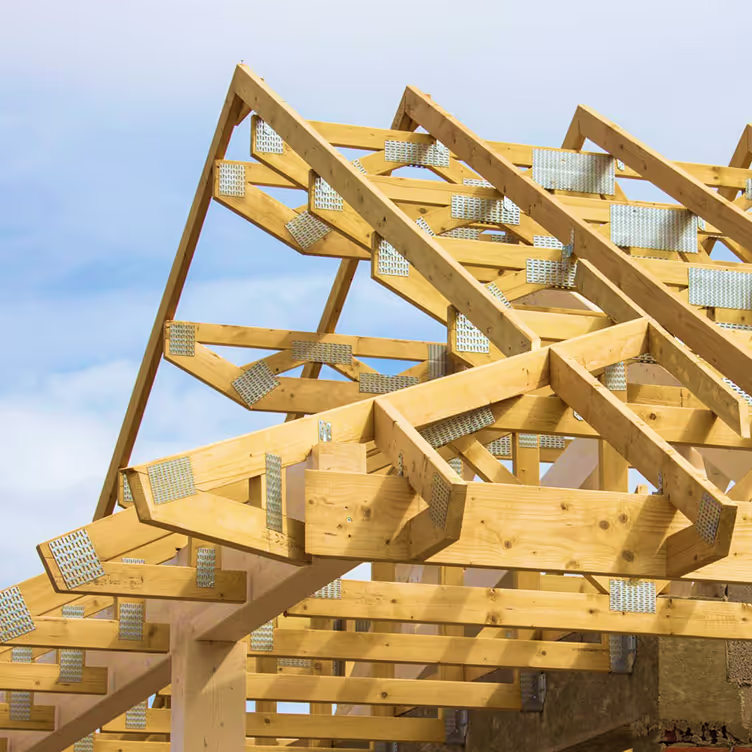
Although roof construction costs represent a relatively small portion of the overall construction budget, they are often considered only after the walls are built. However, it is much more practical to order timber roof trusses much earlier, ideally during the design stage.
By consulting specialists before foundation construction begins, it is possible to find the most efficient roof truss solution. In some cases, this can eliminate the need for certain load-bearing walls, reducing both construction and foundation costs. Clients who planned their roof structure early have saved up to 50% on truss costs and reduced foundation requirements by 20%.
Season also matters. Ordering trusses during the winter can lower material costs, allowing additional savings.
The complexity of the roof structure significantly affects roofing costs. The simpler the structure, the faster the roofing installation and the lower the overall cost. Complex roof designs also limit the choice of roofing materials.
Engineering Systems
When considering external engineering systems, the most economical solution is connection to municipal water, sewage, and nearby electricity networks.
For heating, the most cost-efficient solution today is a well-insulated house equipped with a heat pump.
The greatest challenges are usually obtaining reliable water supply and electricity. Water quality should be tested before purchasing land, checking for organic or inorganic contaminants and the cost of purification if necessary. Ideally, drinking-quality groundwater should be available.
Local biological wastewater treatment systems are also more affordable if groundwater levels are low.
Internal engineering systems include water supply pipes, sewage pipelines, heating systems, electrical installations, and indoor climate systems such as ventilation and air conditioning.
A single-storey house is again more economical, as it simplifies engineering system installation. Two-storey houses require openings in floors for utilities. Additionally, single-storey homes eliminate the need for staircases, which are currently a costly construction element.
Exterior and Interior Finishing
Finishing costs depend largely on the homeowner’s preferences. Many people choose expensive materials for their dream homes, significantly increasing the total cost.
The choice of windows, flooring, façade materials, paints, and interior materials can greatly influence the budget. It is advisable to research the market and take advantage of discounts, such as surplus materials from previous seasons or products available in outlet stores.
This approach requires time and careful selection but can result in a stylish interior without excessive spending.
For timber houses, special attention should be paid to exterior finishing. Siberian larch, once commonly used for durable wooden façades, is currently difficult to obtain in Latvia. European spruce boards are a common alternative but must be properly primed and painted, typically requiring repainting every 5–7 years.
Plastered façades also require maintenance, such as washing or repainting. More durable options include ventilated composite façade systems.
The Simplest and Most Efficient Private House Solution
Current trends in private housing focus on aerated concrete block houses and timber-frame houses. These are lightweight structures that often require only slab foundations when soil conditions are suitable.
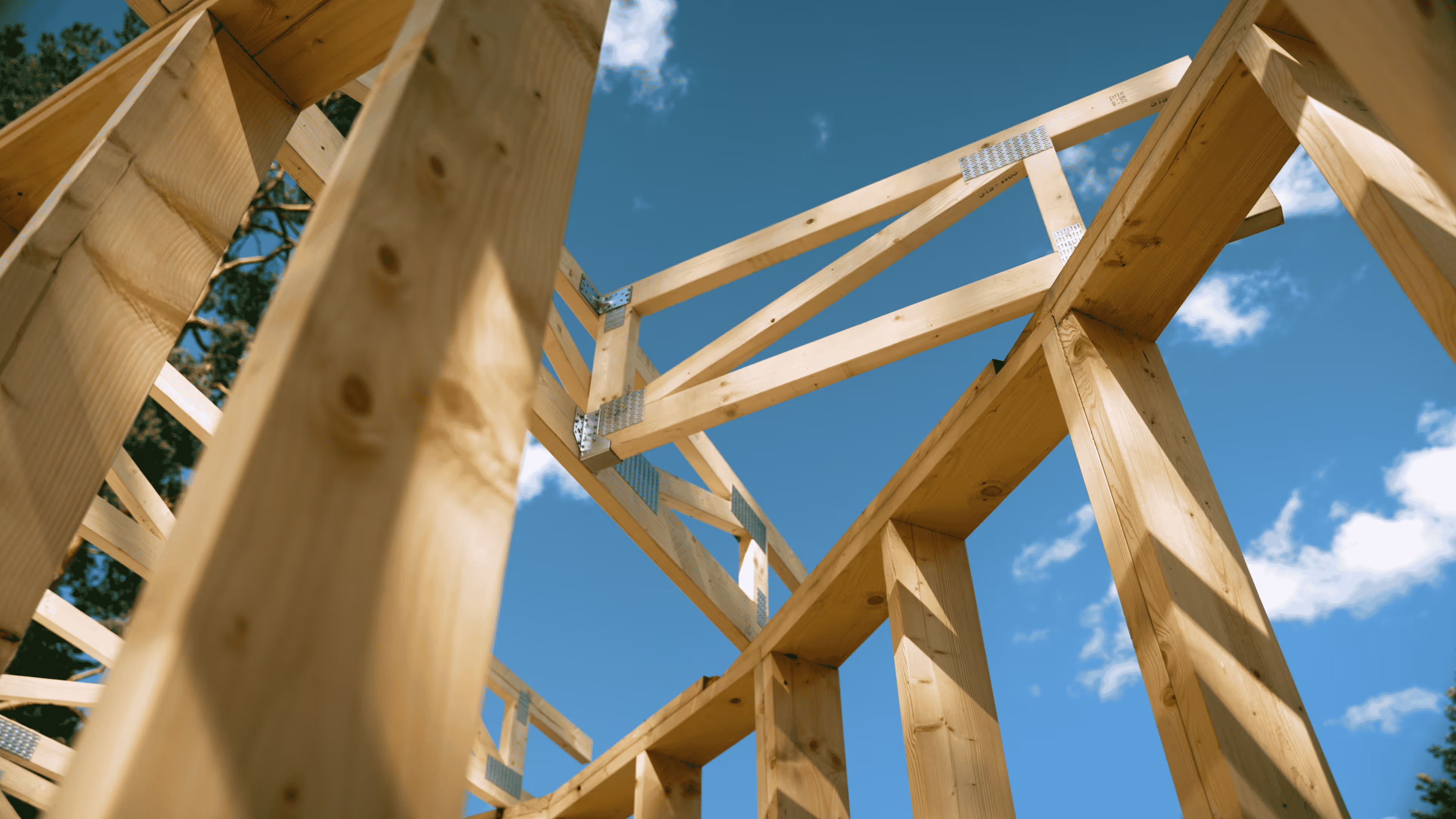
For convenience, timber-frame house manufacturers can deliver prefabricated structures with finishing elements, electrical outlets, and engineering systems already installed. This saves time, money, and personal effort, as homeowners do not need to manage construction daily.
Roof structures for such houses are typically made from factory-produced timber trusses, which are delivered ready for installation. They only need insulation and roofing materials.
However, the roofing material must be selected before truss production, as different materials create different loads and require different structural designs.
Construction professionals estimate that the minimum average cost of building a private house is approximately €2000 per square meter, including the foundation slab, timber-frame structure, roof trusses, and an economical roofing solution. Many of the materials used in such construction are environmentally friendly and sustainable.
Other construction methods, such as aerated concrete block buildings, ceramic block houses, or structures with complex architecture and large glass surfaces, are typically more expensive and take longer to build.
Weather conditions may also delay construction, which is less of a concern in prefabricated timber construction.
Conclusion
These are only some of the major factors influencing the cost of building a house. Additional savings can be achieved by building a smaller house, purchasing a ready-made project, minimizing construction waste, accurately calculating material quantities, and strictly following the approved project plan.
Although it is often said that a building is not constructed starting from the roof, modern design approaches sometimes begin exactly there. A house can be designed by choosing the roof truss system as the starting point. Standard solutions are available where the roof structure determines the layout of load-bearing walls and efficient room planning.
Load calculations may begin with the roof structure and roofing material loads, which then determine the structural wall design and ultimately influence the foundation choice.
We hope our practical advice will help you save as much as possible while building your dream home. Good luck!